When it comes to high-performance cars, the automotive world loves to throw around terms like supercar, hypercar, and megacar. But what do these terms really mean? Are they just fancy marketing buzzwords, or do they actually define different categories of high-speed, high-horsepower beasts?
If you’ve ever dreamt of sitting behind the wheel of a Lamborghini Huracán, Bugatti Chiron, or Koenigsegg Jesko, you might be wondering where these cars fall in the automotive hierarchy. Today, we break down the key differences between supercars, hypercars, and megacars, helping you understand why some cars demand a seven-figure price tag and others are within reach for the average enthusiast.
Definition and Characteristics
A supercar is a high-performance sports car that offers exceptional speed, handling, and engineering while still being (somewhat) practical for everyday driving. Supercars are known for their blistering acceleration, stunning design, and high-revving engines.
Key Features of Supercars:
- Horsepower: Ranges from 500 to 800 HP.
- Top Speed: Generally falls between 180-220 mph.
- Handling: Designed for both track and street driving.
- Technology: Uses lightweight materials like carbon fiber and aluminum.
- Price Range: Typically $100,000 – $500,000.
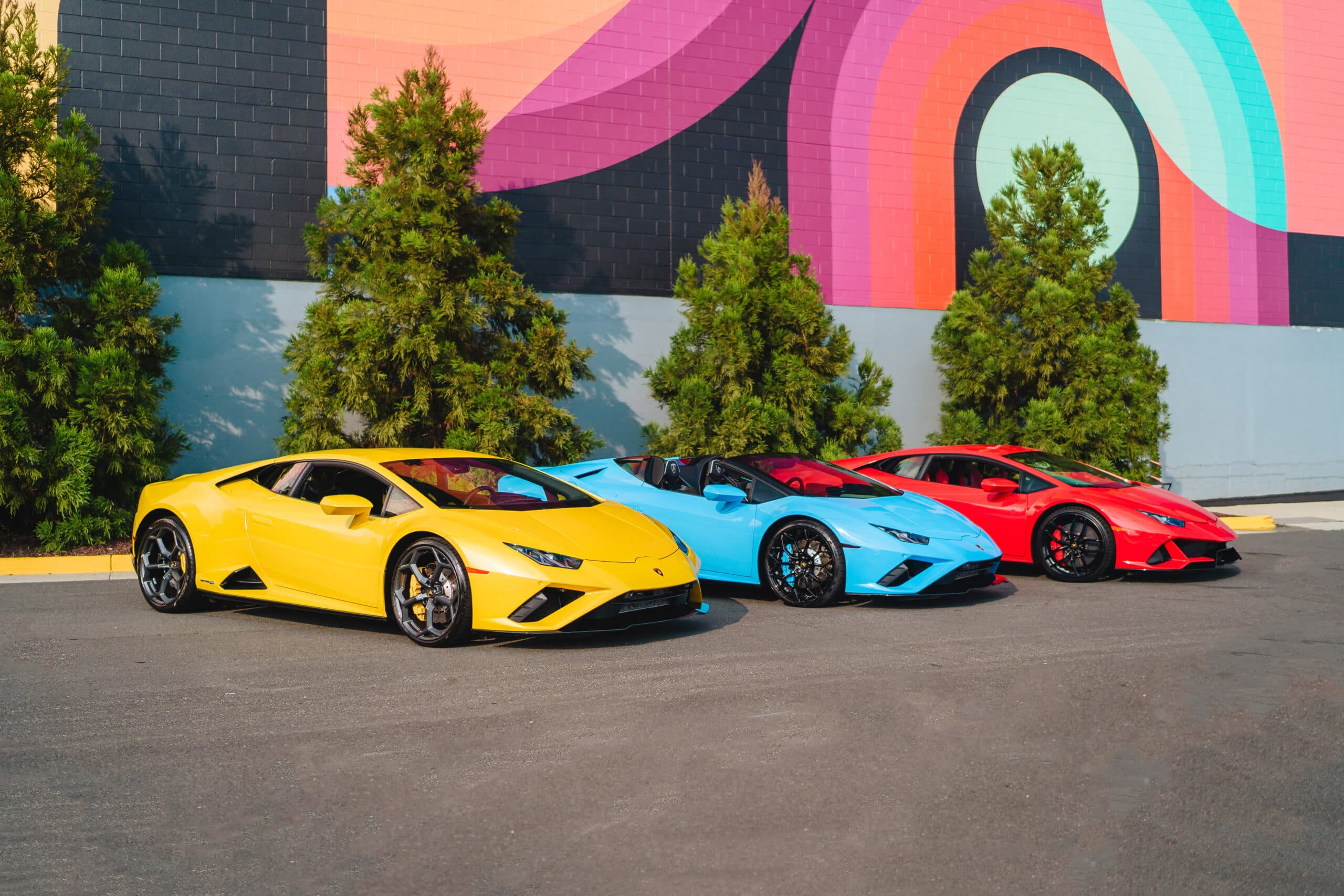
- Lamborghini Huracán EVO (640 HP, 202 mph top speed)
- Ferrari F8 Tributo (710 HP, 211 mph top speed)
- Porsche 911 Turbo S (640 HP, 205 mph top speed)
Supercars offer an exhilarating driving experience without being over-the-top. They’re relatively accessible in the world of high-performance cars and are the entry-level choice for anyone looking to own an exotic machine.
What Makes a Hypercar Different from a Supercar?
A hypercar takes everything a supercar has and turns the dial up to eleven. These are the pinnacle of automotive performance, featuring advanced aerodynamics, hybrid powertrains, and speeds that rival Formula 1 cars. Hypercars aren’t just about raw speed; they also introduce futuristic technology that eventually trickles down to supercars.
Key Features of Hypercars:
- Horsepower: Typically ranges from 800 to 1,500 HP.
- Top Speed: Exceeds 210 mph.
- Exclusivity: Limited production, often under 1,000 units.
- Technology: Uses hybrid or electric-assisted powertrains, active aerodynamics, and cutting-edge materials.
- Price Range: $1 million – $3 million.
- Bugatti Chiron (1,479 HP, 261 mph top speed)
- McLaren P1 (903 HP, 217 mph top speed)
- Ferrari LaFerrari (950 HP, 217 mph top speed)
Hypercars are often built in extremely limited numbers, making them highly sought after by collectors. They redefine what’s possible in the automotive world and push the limits of performance, often featuring active spoilers, hybrid-electric assist systems, and track-focused aerodynamics.
What is a Megacar? The Newest Category in Performance Cars
The term megacar is relatively new and is used to describe vehicles with at least one megawatt (1,341 HP) of power. This class was pioneered by Koenigsegg, a Swedish automaker that decided that even hypercars weren’t extreme enough.
Key Features of Megacars:
- Horsepower: 1,341 HP and above.
- Top Speed: Can approach or exceed 300 mph.
- Rarity: Fewer than 100 units produced.
- Technology: Advanced aerodynamics, ultra-lightweight materials, and hybrid/turbocharged V8s and W16s.
- Price Range: $3 million and beyond.
- Koenigsegg Jesko Absolut (1,600 HP, 330 mph estimated top speed)
- Bugatti Chiron Super Sport 300+ (1,578 HP, top speed limited to 273 mph; a pre-production car reached 304 mph in 2019)
- Koenigsegg One:1 (1,341 HP)
Megacars are so extreme that they often blur the line between road-legal vehicles and race cars. They are engineering marvels, representing the peak of performance, technology, and exclusivity.
Supercars vs. Hypercars vs. Megacars: Key Differences
The Evolution of High-Performance Cars
High-performance cars have evolved drastically over the years. Supercars like the Ferrari F40 and Lamborghini Diablo dominated the 1980s and 1990s. The early 2000s saw the rise of hypercars with the Bugatti Veyron setting new records. Today, megacars push the limits with mind-blowing speeds and electrification playing a crucial role in the future of performance cars.
The Role of Electric and Hybrid Powertrains
As technology advances, more hybrid hypercars and fully electric performance cars are entering the market. Models like the Rimac Nevera and the Pininfarina Battista are proving that electricity can deliver performance that competes with traditional gasoline engines.
Why These Categories Matter to Enthusiasts and Collectors
- Branding & Prestige: The difference between owning a supercar and a hypercar is often a matter of prestige and exclusivity.
- Investment Value: Hypercars and megacars appreciate over time due to their limited production numbers.
- Driving Experience: Supercars are designed to be driven regularly, while hypercars and megacars are often garage queens or track-focused monsters.
Want to Experience a Supercar? Try Exotic Car Rentals!
If buying a supercar, hypercar, or megacar isn’t in your budget (yet), you can still experience the thrill of a true supercar! Supercars By The Day, an exotic car rental agency in the DMV area (Washington, D.C., Maryland, Virginia), offers a fleet of luxury and exotic cars that let you live the dream without spending millions.
Whether you want to cruise the streets of D.C. in a Lamborghini Huracán or make an entrance at an event in a McLaren GT, Supercars By The Day can make it happen. Renting an exotic car is the perfect way to test-drive your dream car, impress at an event, or simply enjoy a high-performance car.
Supercars, hypercars, and megacars each have their place in the automotive world. Supercars offer thrilling performance while being somewhat practical, hypercars push the limits of engineering and exclusivity, and megacars redefine what’s possible in terms of power and speed.
If you’re a car enthusiast, you don’t need to own one of these beasts to experience the thrill. Renting a supercar from Supercars By The Day could be the perfect way to get behind the wheel of a dream machine.
1. What is the main difference between a supercar, a hypercar, and a megacar?
Supercars offer high performance and luxury, hypercars push technological and speed limits, and megacars exceed 1 megawatt (1,341 HP) of power, making them the most extreme in performance and exclusivity.
2. Are all hypercars also supercars?
Technically, yes. Hypercars are a sub-category of supercars, but they feature more advanced technology, higher horsepower, and greater exclusivity.
3. What qualifies a car as a megacar?
A megacar must produce at least 1 megawatt (1,341 HP) of power, which is why only a few vehicles, like the Koenigsegg Jesko Absolut, qualify for this elite category.
4. Can I rent a supercar or hypercar instead of buying one?
Yes! Exotic car rental agencies like Supercars By The Day in the DMV area offer supercars for rent, such as our Ferrari SF90 Stradale and Lamborghini Huracán STO, allowing enthusiasts to experience luxury and performance without ownership costs. Hypercars like Bugatti and Koenigsegg aren’t available to rent from us.
5. Are hypercars street-legal?
Most hypercars are street-legal, but some, like the Aston Martin Valkyrie AMR Pro, are designed purely for the track and require modifications to be roadworthy.
6. Which is the fastest megacar?
The Koenigsegg Jesko Absolut is expected to be the fastest, with a projected top speed of 330+ mph, though official tests are still awaited.
7. Why are hypercars and megacars so expensive?
They use cutting-edge materials, advanced aerodynamics, and ultra-powerful engines while being produced in limited numbers, making them rare and highly valuable.
8. Do electric cars qualify as hypercars or megacars?
Yes! Electric hypercars like the Rimac Nevera and Pininfarina Battista exceed 1,000 HP and offer extreme performance comparable to their gasoline-powered counterparts.
9. Which brands are known for making hypercars and megacars?
Top brands include Bugatti, Ferrari, McLaren, Koenigsegg, Rimac, and Pagani, all known for creating ultra-high-performance vehicles.
10. What is the most affordable supercar?
Some of the most budget-friendly supercars include the Chevrolet Corvette Z06, Porsche 911 Turbo S, and Acura NSX, which offer supercar performance at lower price points.